Project 01 / 2026 / Outerwear
| Category | Hooded technical outerwear, menswear |
|---|---|
| Role | Design, patternmaking, 3D development, sample construction |
| Software | CLO3D — 2D pattern & 3D simulation |
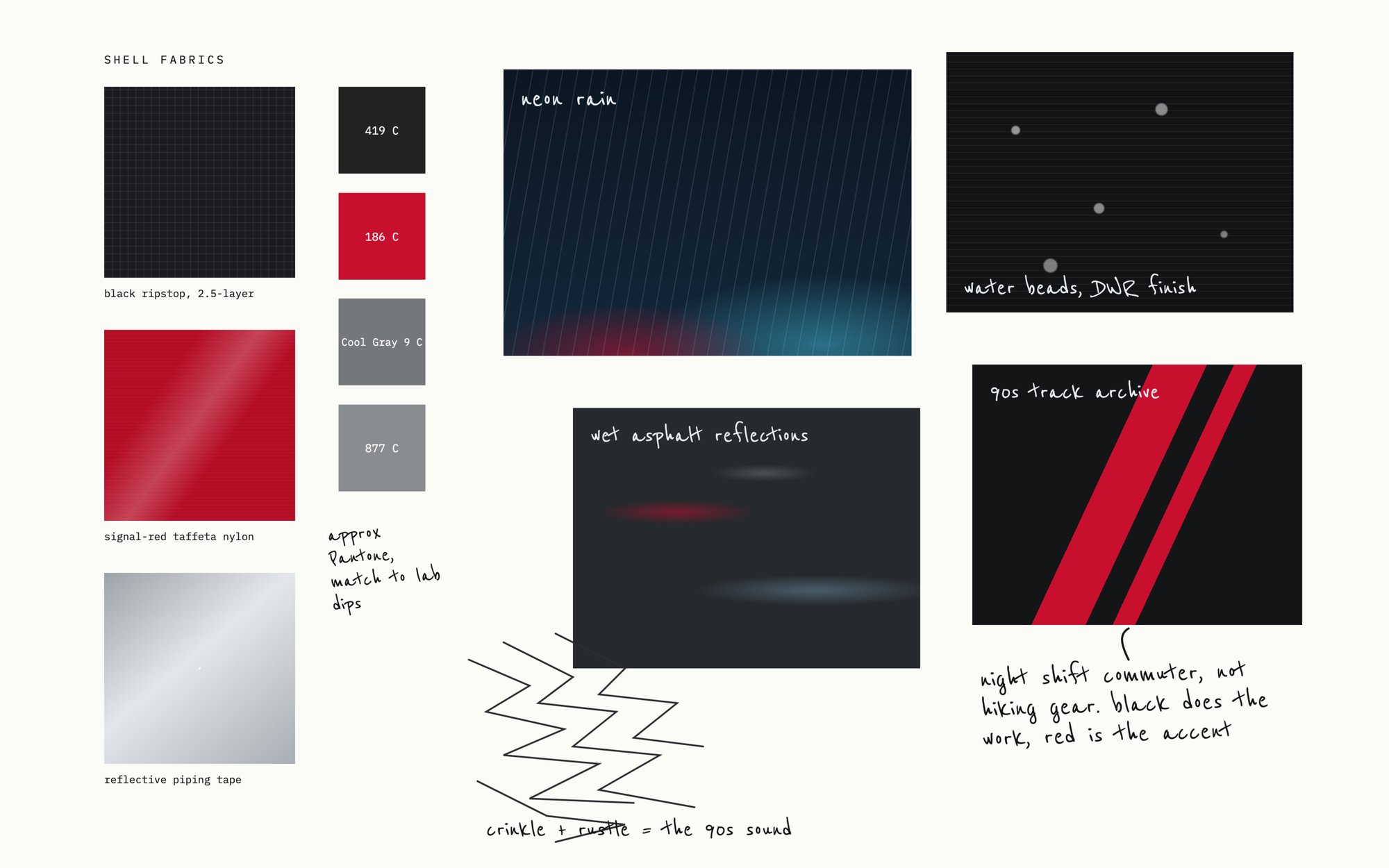
| Shell fabric | Black 2.5-layer ripstop body; signal-red taffeta nylon side panels; reflective piping tape at the yoke |
| Hardware | Laminated zip + garage, hood cord lock, velcro cuff tab |
| Context | [Course project? Self-directed? Which term?] |
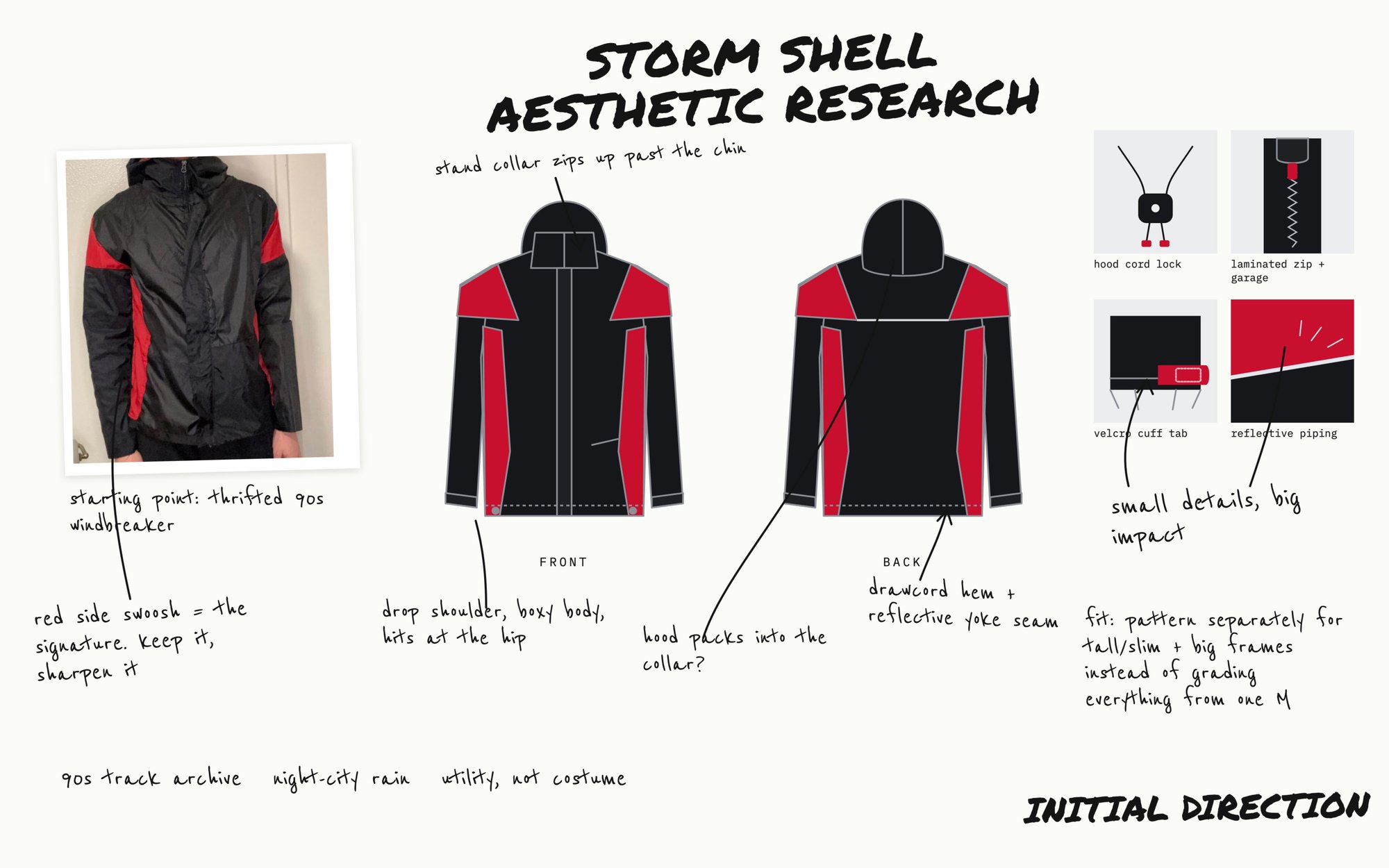
Started from a thrifted 90s windbreaker — drop shoulder, boxy body, a stand collar that zips up past the chin. The red side panel read as the garment's signature from the first try-on, so the brief became simple: keep it, and sharpen everything else around it. Built for night-city rain, not a trailhead — utility, not costume.
Developed digitally first — pattern drafted and simulated in CLO3D, colourway and panel breaks resolved on the 3D avatar — then cut and sewn as a physical sample to validate the fit and the construction.
“Red side swoosh = the signature. Keep it, sharpen it.” — margin note, initial direction board

Approximate Pantone, matched to lab dips.
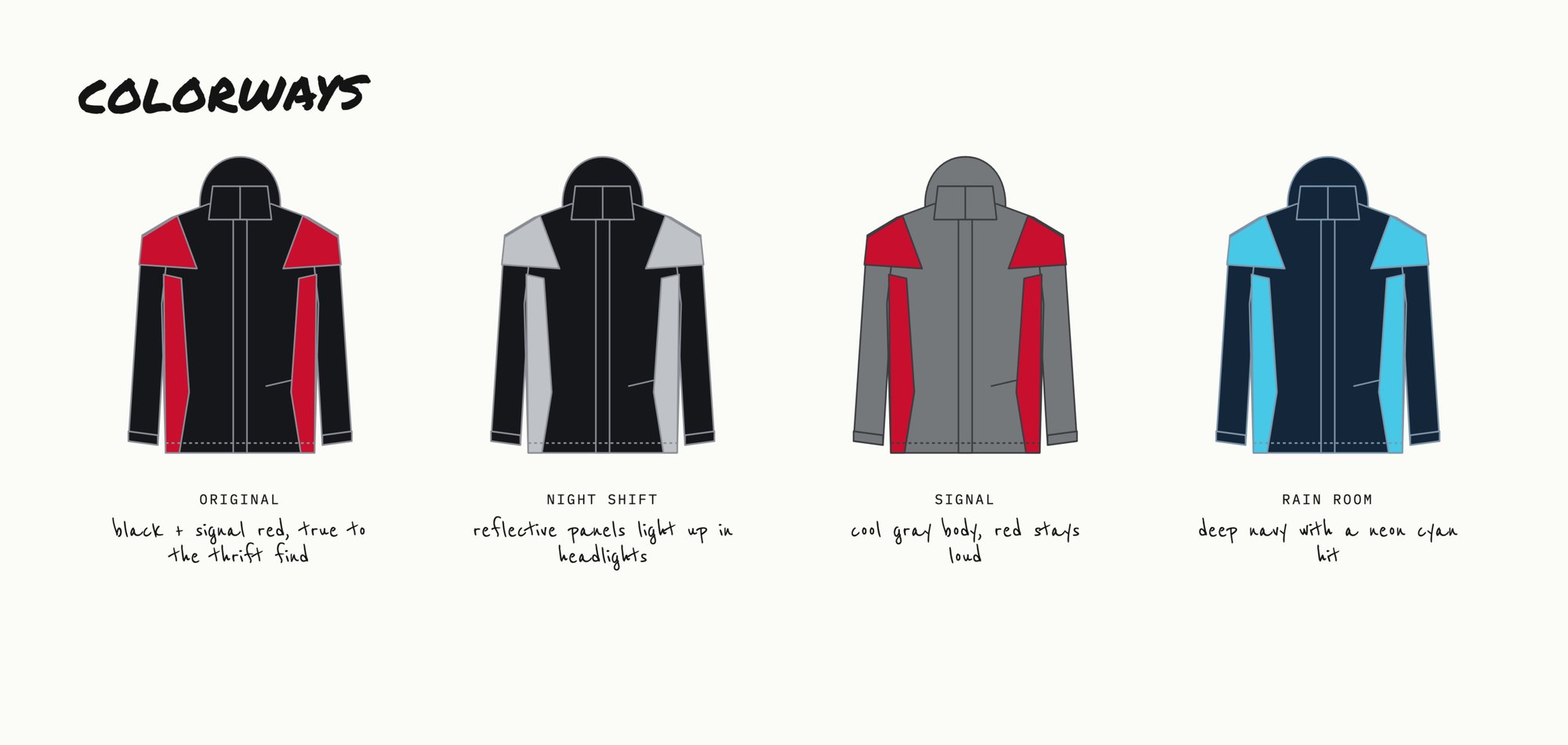
True to the thrift find.
Light up in headlights.
Red stays loud.
A neon cyan hit.
Step 01
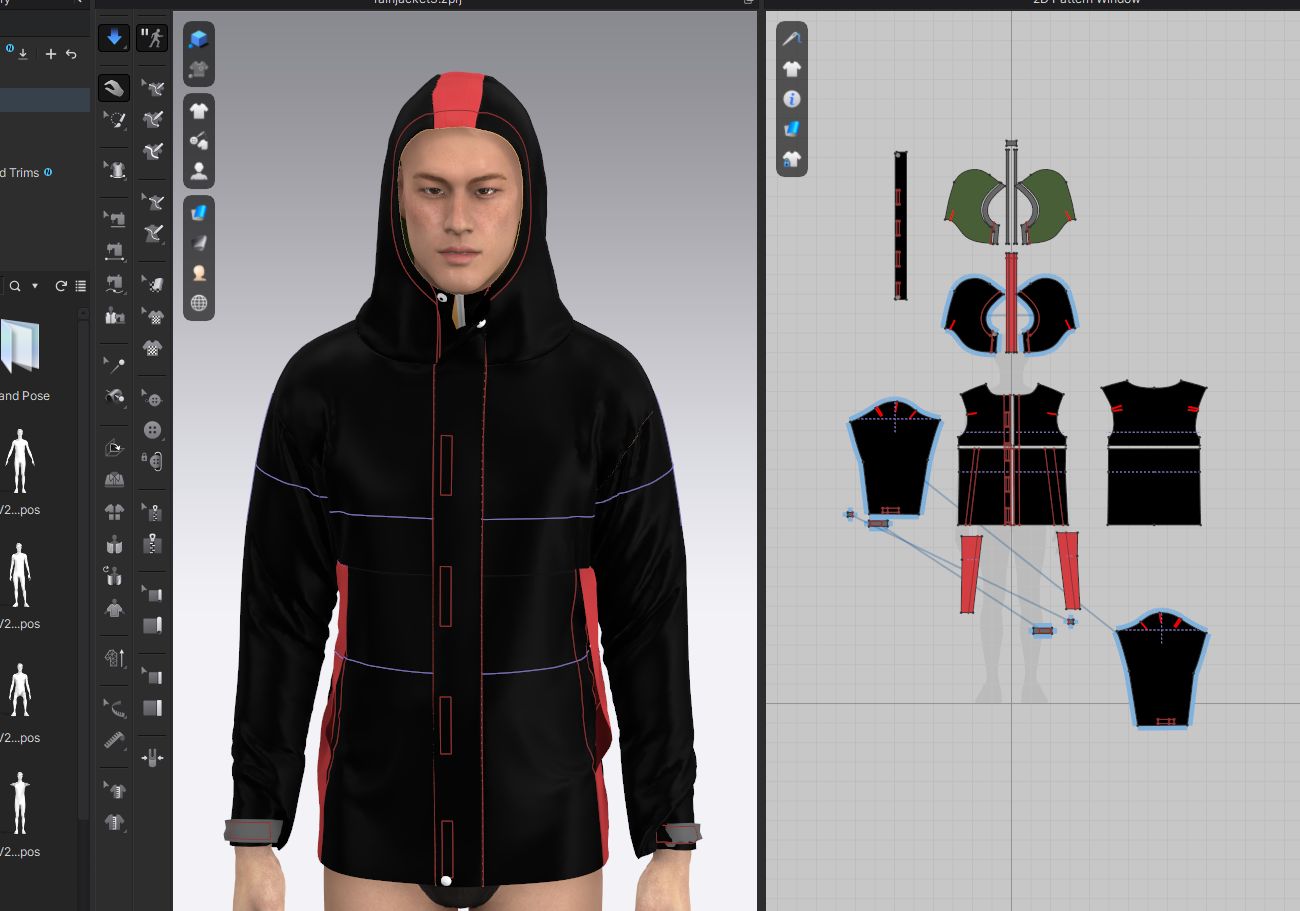
Pattern pieces drafted flat and simulated on the avatar in CLO3D — hood, two-piece sleeve, front and back body with contrast side panels, cuff tabs and a centre-front placket. Panel breaks and seam placement were resolved digitally before any fabric was cut.

Step 02
Material and colour tested on the simulated garment — black shell against red side panels and a red hood crown insert, carrying the accent from the hood down through the body seam. Re-rendered in a second environment pass to check how the colorway reads off-studio.
Step 03
Cut and constructed as a wearable sample. [Add a line on what changed from the digital pattern to the sewn version — fit adjustments, seam or hardware changes.]